Select Project Experience
-
Situation: As the lead for a hospital system engagement, I encountered a critical operational challenge: 50+ rehabilitation facilities were managing therapist scheduling through fragmented, manual processes. Each location used different spreadsheet systems prone to errors and inefficiencies. This lack of standardization was impacting compliance and wasting significant clinician time that could be spent on patient care.
Task: I was brought in to design and implement a unified scheduling solution across the entire hospital system within a 12-week timeline. The challenge extended beyond technical delivery. I needed to align diverse stakeholders from C-suite executives (CFO, CEO, CTO) down to facility leadership (CNOs, Therapy Directors) and front-line therapists (PT, OT, ST), while managing change across 50 different legacy processes.
Action: I launched a comprehensive discovery process, conducting over 40 stakeholder interviews across multiple regions, facilities, and therapy disciplines to understand the full scope of scheduling workflows and pain points. Using these insights, I prioritized three core features: efficiency (streamlined navigation with minimal clicks), visibility (multi-user access and real-time editing), and adaptability (dynamic schedule adjustment throughout the day). I coordinated cross-functional execution across business, operations, design, training, and engineering teams while implementing a phased, top-down rollout strategy. Starting with corporate leadership buy-in, we cascaded through regional directors and culminated in facility-level adoption. This approach ensured consistent change management and stakeholder alignment across the organization.
Result: The scheduling tool successfully deployed across all 50+ facilities, reducing scheduling time by 75% and significantly improving compliance with clinical protocols. By transforming a fragmented, error-prone process into a standardized, efficient system, we freed up substantial clinician time for direct patient care while establishing a scalable operational foundation for the hospital system's continued growth.

-
Situation: A large hospital system had developed a patient-facing application but lacked visibility into critical business metrics driving patient volume and operational performance. Without real-time, actionable data insights, C-suite executives were unable to make informed strategic decisions or efficiently delegate operational responsibilities, limiting their ability to scale and optimize the business.
Task: Within an 8-week timeline, I was tasked with delivering four high-visibility executive dashboards that would provide immediate access to key performance metrics. The dashboards needed to be fully integrated into the client's existing IT infrastructure to ensure seamless handoff and long-term sustainability. The challenge was compounded by the need to integrate cutting-edge AI capabilities. Specifically, Microsoft Copilot enabled through a shared semantic model would allow executives to ask exploratory questions beyond pre-built visualizations, plus incorporate machine learning analytics from our data science team.
Action: I served as the project manager, product manager, and primary client liaison, working hands-on daily to drive execution across technical and business stakeholders. I navigated the complexity of a large enterprise IT environment, aligning multiple internal teams (each responsible for one component: Copilot, Fabric, OneLake, Power BI) to create a cohesive solution fully integrated with their existing technology strategy. Given executives' limited availability for traditional discovery sessions, I established a streamlined requirements process. I worked through a key stakeholder representative while maintaining transparent communication channels for broader team input. I was deeply involved in execution, often making PowerBI adjustments directly, conducting testing, and ensuring the shared semantic model properly enabled Copilot to answer ad-hoc questions across the data ecosystem. I coordinated closely with our data scientists to integrate exploratory ML analytics into the dashboard experience and worked with the client's IT teams to ensure complete integration for a seamless operational handoff.
Result: The four dashboards successfully delivered real-time visibility into business-critical metrics, empowering C-suite leadership to make data-driven decisions and delegate more effectively. The project's success directly secured a significant follow-on contract for expanded analytics capabilities, demonstrating clear ROI and establishing a foundation for the hospital system's continued data maturity. Executives gained the ability to interact dynamically with their data through Copilot, asking questions that went beyond static dashboards. This transformed how leadership engaged with business intelligence. The seamless integration into existing IT infrastructure enabled the client to maintain and evolve the solution independently post-handoff.
-
Situation: As the Product Manager for a rehabilitation healthcare application, I inherited a 4-year-old iOS, Android, and Web app that had become dated and difficult to navigate. Clinicians and patients were struggling with an unintuitive interface that hindered engagement and created friction in the recovery process. The application needed a comprehensive redesign to meet modern usability standards and improve user outcomes.
Task: I was tasked with leading a full UI/UX redesign to create a more intuitive, accessible interface that would increase user engagement for both clinicians and patients. This required deep discovery into pain points across diverse user groups and coordination with design teams to balance clinical workflows with patient-facing functionality.
Action: I launched a comprehensive discovery process, working closely with subject matter experts and UI/UX designers to identify specific areas for improvement across the application. I conducted stakeholder interviews and usability assessments to pinpoint navigation challenges and feature gaps. Using these insights, I guided the design team to streamline navigation paths, refresh outdated features, and introduce personalized capabilities that aligned closely with user needs. I maintained close collaboration between clinical SMEs and designers throughout the process to ensure the redesign served both populations effectively.
Result: The redesigned interface delivered a significantly more intuitive user experience, enabling both clinicians and patients to navigate the rehabilitation journey seamlessly. The application received positive feedback from both user groups, with improved engagement metrics and enhanced clinical workflow efficiency. The modernized platform positioned the product competitively and established a foundation for continued feature development.
-
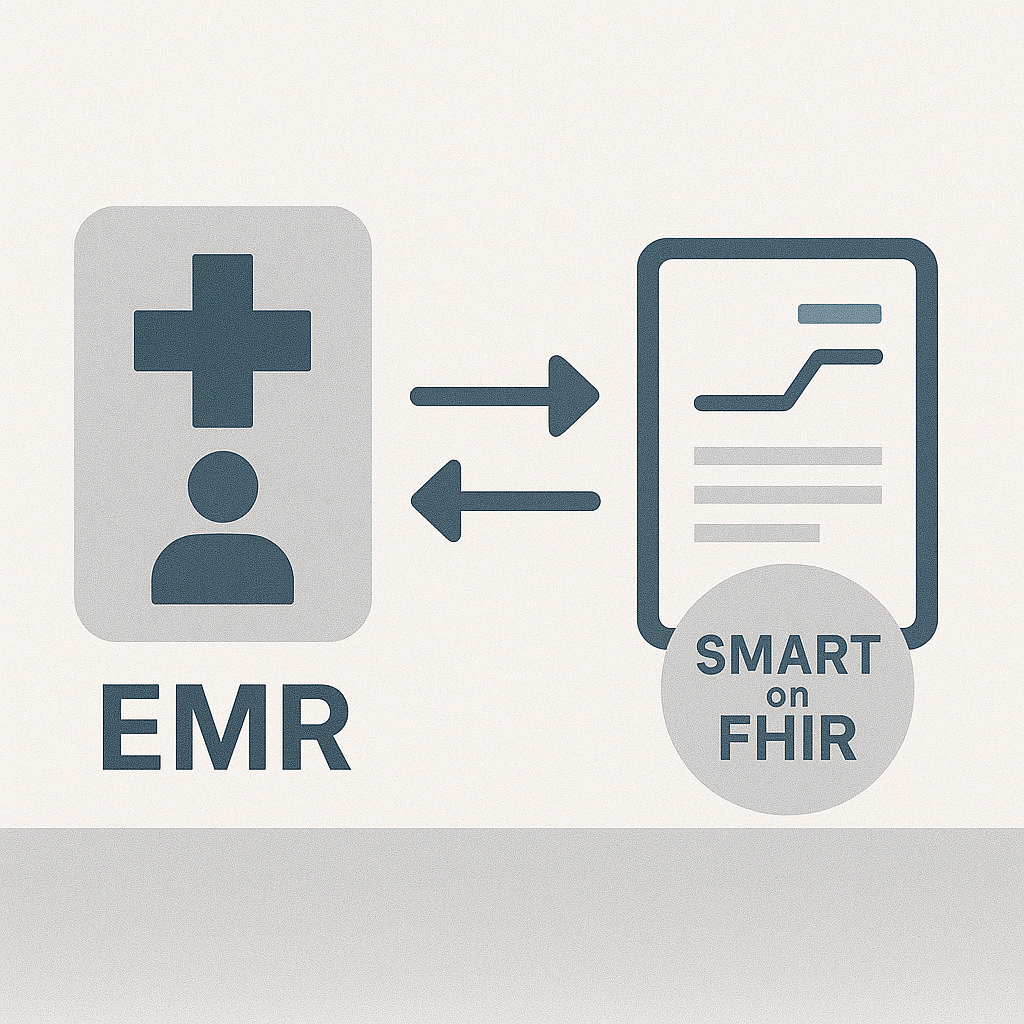
Situation: As the Product Manager overseeing our rehabilitation application, I identified a critical gap in clinical workflow efficiency. Clinicians lacked real-time access to patient data from Electronic Medical Record (EMR) systems, forcing them to toggle between multiple platforms and creating delays in care delivery. The application needed seamless interoperability with existing EMR infrastructure to improve clinical decision-making and patient outcomes.
Task: I was tasked with researching and implementing a secure, efficient data exchange solution between our application and existing EMR systems. The solution needed to meet healthcare interoperability standards, ensure data security compliance, and provide clinicians with real-time access to critical patient information without disrupting existing clinical workflows.
Action: I adopted a strategic, research-driven approach by thoroughly investigating the SMART on FHIR framework for API integration. I studied its technical standards, security requirements, and implementation best practices to understand how it could meet our clinical and compliance needs. I worked closely with the development team to design an integration architecture that would support secure, real-time data exchange while meeting both clinical workflow requirements and healthcare interoperability standards. I coordinated with EMR vendors and internal stakeholders to ensure smooth technical implementation and conducted testing to validate data accuracy and system performance.
Result: The successful EMR integration empowered clinicians with immediate access to critical patient data directly within our application, eliminating the need to switch between systems. This streamlined clinical workflows, improved decision-making speed and accuracy, and enhanced the overall rehabilitation process. The integration positioned our application as a more competitive solution in the healthcare technology market and contributed to measurably better patient outcomes.
-
Situation: As a Product Manager conducting discovery work for a client in the oil and gas industry, I was brought into a project exploring emerging technologies and their potential applications within this rapidly evolving sector. The client needed strategic guidance on whether to build a new solution leveraging machine learning and advanced analytics, but lacked clarity on the technical landscape and competitive positioning.
Task: Within a compressed timeline, I needed to quickly familiarize myself with complex emerging technologies in the oil and gas space, understand their technical capabilities and limitations, and assess the competitive landscape. My goal was to provide the client with a well-informed recommendation on whether to proceed with building a new solution and, if so, how to position it for competitive advantage.
Action: I immersed myself in the technical details of various innovative solutions, conducting deep research into machine learning applications, data analytics platforms, and industry-specific use cases. Simultaneously, I performed a comprehensive competitive analysis to identify market gaps, emerging trends, and opportunities for differentiation. I synthesized these technical insights with strategic market analysis, facilitating collaborative sessions with the client's technical and business teams to align on priorities and evaluate build feasibility. I presented clear, actionable recommendations that balanced technical capability with market opportunity and resource constraints.
Result: Our strategic approach led to a confident build decision backed by thorough technical and market analysis. The resulting solution not only addressed the client's immediate operational needs but also positioned them to stay ahead of competitors in the rapidly evolving oil and gas technology landscape. The discovery work provided a clear roadmap for development and established a foundation for the client's long-term competitive advantage in their market.
-
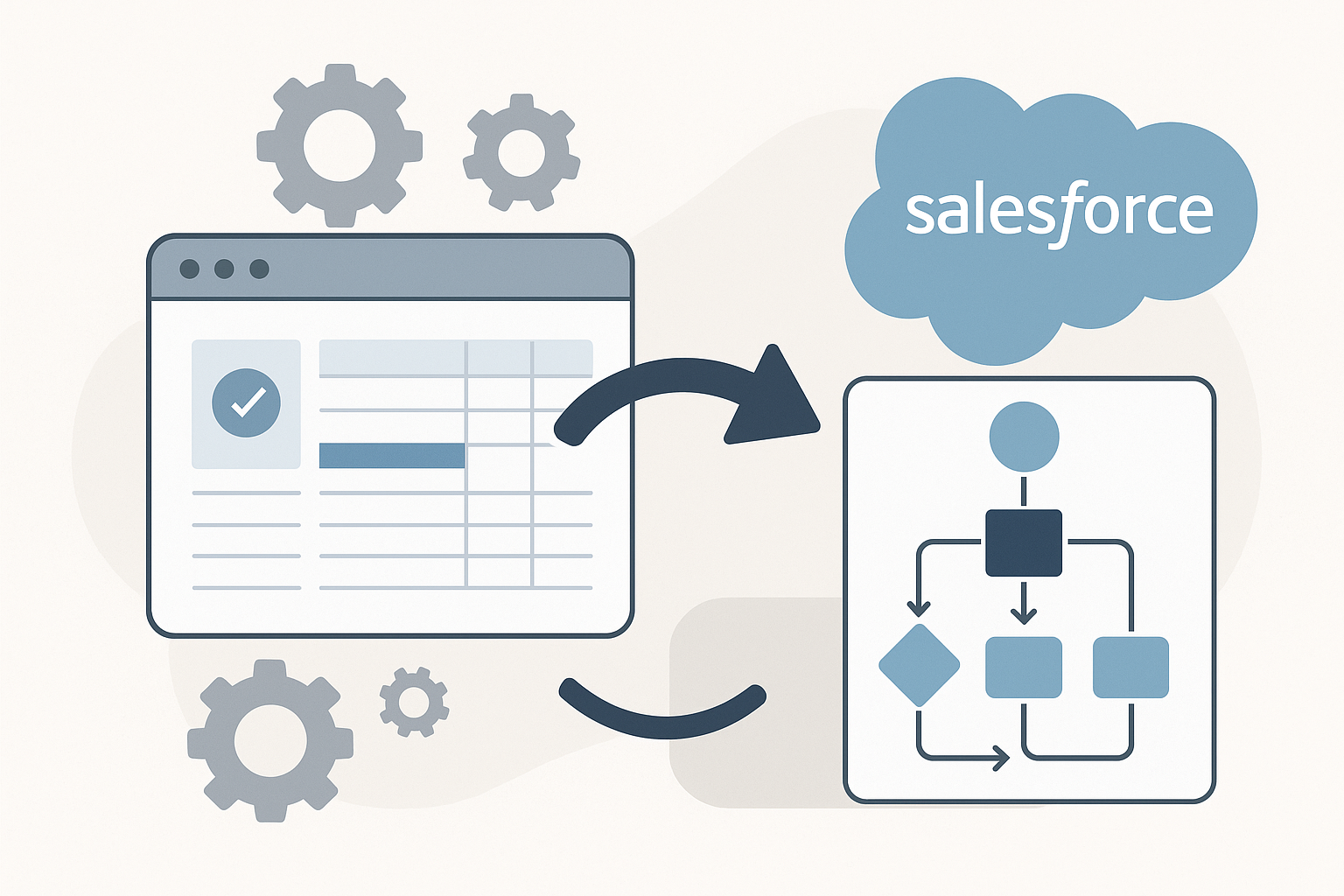
Situation: As a Product Analyst supporting a workflow optimization initiative, I encountered a team managing complex operational processes through fragmented Google Sheets. This manual system was creating inefficiencies, data inconsistencies, and scalability limitations. The team needed to transition to Salesforce to improve operational efficiency and enable better data management.
Task: I was tasked with gathering detailed information on existing workflows, identifying pain points and bottlenecks, and outlining comprehensive requirements for the Salesforce migration. The transition needed to be seamless, preserve critical workflow logic, and align with team needs while introducing opportunities for automation and efficiency improvements.
Action: I conducted in-depth stakeholder interviews across the team to understand current challenges, workflow dependencies, and specific requirements for the new system. I documented existing processes in detail, identifying manual steps that could be automated and areas where the current system created friction. Using these insights, I developed comprehensive process flow diagrams that mapped each workflow step, highlighting opportunities for streamlining and automation within Salesforce. I worked closely with the Salesforce implementation team to translate business requirements into technical specifications, ensuring the new system would support both current needs and future scalability. I maintained regular communication with stakeholders throughout the transition to address concerns and validate that the solution was meeting expectations.
Result: The transition to Salesforce was seamless and fully aligned with team requirements, resulting in streamlined operations and significantly enhanced data management capabilities. The team experienced improved workflow efficiency through automated processes that eliminated manual data handling and reduced errors. The new system provided better visibility into operations, enabled more effective reporting, and established a scalable foundation for the team's continued growth.